
By Kaveesha Coswatte
Image Credit: NewsFirst Sri Lanka
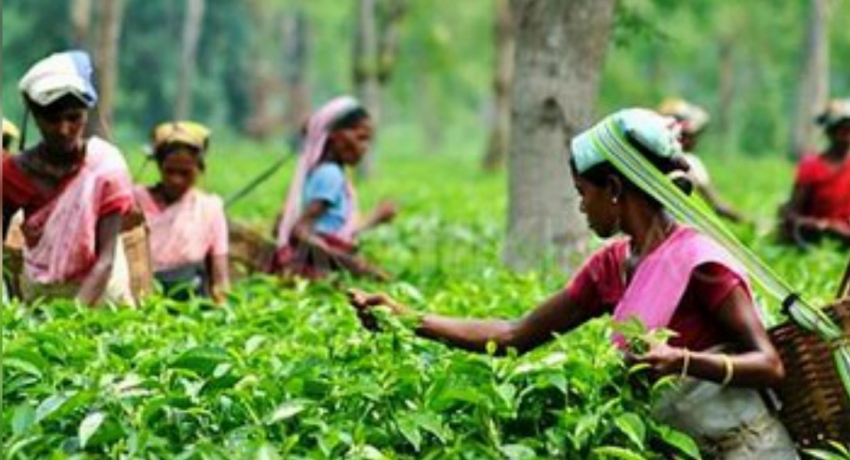
It has been a longstanding labor rights issue within Sri Lanka. It has been a sector that has its roots in the colonial eras under British Rule. It remains one of the most underpaid occupations in the country: The Estate sector. Upon close analysis of the problems arising from within the estate sector labor force, particularly from female workers, it has become increasingly clear that we can no longer view this matter through the lens of a labor rights issue but as a human rights issue. Due to this reason, it has become imperative that Sri Lanka ratifies the C190 ILO Convention that operates as one of the most progressive conventions to come into force dealing with workplace and work-related harassment. It firmly asserts that gender-based violence and harassment is a systemic problem rooted in unequal abusive power relations within a society and, by extension, in the world of work, as part of intersecting systems of oppression.
What is the C190?
C190 is the first international instrument to end violence and harassment in the world of work to shape a future of work for everyone founded on dignity, respect, and being free from violence and harassment. It remains revolutionary as it primarily bridges the global regulatory gap on workplace sexual harassment and its surrounding issues. Furthermore, it sees violence and harassment in the world of work as one that constitutes a human rights violation or abuse and finds that it is a threat to equal opportunities and unacceptable albeit incompatible with “decent work.” The Convention is groundbreaking for its specific focus on Gender-Based Violence (GBV). Acknowledging that gender-based violence and harassment excessively affects women and girls, the Convention pushes the obligation on the State to develop policies housing an inclusive, integrated, intersectional approach. This ensures that the policies can account for multiple forms of discrimination and unequal gender-based power relations. Considering the various account of violence, harassment, and unfair treatment we have heard from the voices within the Estate sector, this Convention remains the most befitting legal foundation to provide much-needed security and protection to such workers.
C190 takes a realistic tactic in defining violence and harassment as “a range of unacceptable behaviors and practices” that “aim at, result in, or are likely to result in physical, psychological, sexual or economic harm.” Hence this will cover physical abuse, verbal abuse, bullying and mobbing, sexual harassment, threats, and stalking, among other things.
It also carries a broad definition of who a worker is, equally covering all workers and employees irrespective of their contractual status. It applies to every sector, the formal and informal economy, rural and urban areas. This adds an advantage to the present issue since it takes an inclusive and integrated approach in its scope of protection, making it possible for even estate workers to be covered.
It also expands the concept of the world of work beyond the immediate physical workplace that a person works in, covering situations linked to or arising out of employment, such as (a) in the workplace, including public and private spaces where they are a place of work; (b) in places where the worker is paid, takes a rest break or a meal, or uses sanitary, washing and changing facilities; (c) during work-related trips, travel, training, events or social activities; (d) through work-related communications, including those enabled by information and communication technologies; (e) in employer-provided accommodation; and (f) when commuting to and from work. Through such extensive coverage, it is clear that C190 remains momentous as an international legal standard to heavily protect women at work from harassment and abuse, as the first of its kind using the most comprehensive application of protections.
Why C190 for Estate Sector?
The estate sector of Sri Lanka has two main types of workers: The Tea Plantation workers and The Rubber Estate workers. However, more often than not, we find little information about the Rubber Estate sector as most literature identifies tea estate workers as one of the most vulnerable sectors in Sri Lankan society both within the world of work and in a socio-cultural perspective. They also remain a section in society with a low literacy and education rate. Only 20.2% of the plantation population has a secondary education, and more than half (55.9%) of the plantation population only has primary education. However, this is also since due to extreme poverty, children and young persons enter into the plantation work so that their families can survive. However, this does not mean that they do get an acceptable wage even to meet the minimum cost of living. It was only in January 2021 that the fight to increase an estate worker’s daily wage was won, and the State made it mandatory that the minimum daily wage for an estate worker comes up to 1000 rupees.
Even though tea and rubber remain one of the most prominent exports in the country, the conditions that its workers are employed under, the harassment and hardships they have to face, especially the female estate worker, is rarely brought into public eye and rights related conversations. Although a few laws cover Estate workers within Sri Lanka, they provide little to no real protection from harassment and other grievances that may arise during employment in this sector. This is also coupled with the fact that the lineage of Tea plantation workers is rooted in India, and they are considered “other” in a social sense. Citizenship and election laws have also contributed to their historical statelessness and disenfranchisement of up-country Tamils working in tea estates. The Pradeshiya Sabha Act No. 15 of 1987 contributed to their exclusion from local governance and public services delivery. There are a few labor laws and by-laws, for example, Collective Agreements and various Ordinances and Acts contained in the Labor Code of Sri Lanka, which provide for the minimum wages and social welfare rights of plantation workers. Still, in the reality of the lives of these workers, they mean very little.
The lack of protection by law and the social status of these workers have left them prey to many workplace atrocities that are more often also hidden within the proverbial doors. However, the stories that have managed to reach the ears of those listening have been horrifying and a resounding call for help that the State and its citizens must focus on answering. The following accounts are quoted from a closed meeting with female estate workers who show a minor insight into the experiences female workers have to face in their employment within the estates they work and live in. Expressing her experience as a pregnant woman, one female worker explained how she had explained to the Estate manager that she could not come to work early in the morning as she used to and to give her leave for her checkups, she was told that she was not entitled to such leave and was asked to pull up her clothes and show her body to the manager as proof that she is pregnant. Most female workers expressed that they do not even have the luxury of changing their sanitary napkins in a private space and have to go through the humiliation of explaining why they need to change their napkins and why they require a private room to do so. Another worker explained how when they go to the Police to make a complaint, they are not given the basic respect or dignity, or the Police do not even take their complaint down because of the way they dress or talk. It must also be noted that most of these females are not in charge of their wages, which are taken by the male figures in their households who then also use the money for alcohol, resulting in increased levels of domestic abuse. All-female workers who spoke felt that they were just slaves to men, had no faith in the system and did not feel they had any rights.
These are just some of the stories that have had the chance to reach ears that will listen and now to a broader audience. To those working in the labor force as private or public employees, these experiences may seem almost alien due to the codes of conduct and strict contractual obligations that we are bound to follow, perhaps almost unbelievable that people are working in such conditions with no protection even from the law enforcement authorities they should be able to rely on. It is these stories that make it imperative that Sri Lanka ratifies a convention like ILO C190 amongst all the conventions we proudly have incorporated into our legal system. It remains a responsibility of the Sri Lankan State to put in place the Rights and Protections offered by the C190 to combat such gross violations of labor and human rights that frequently occur within the estate sector and to make sure that it enforces a responsibility on the Regional Plantation Companies and other bodies that deal within the Estate sector to follow the guidelines and rules set down by the Convention. We can no longer allow the Estate workers in this country to remain a disadvantaged community, discriminated against, and exist as individuals that do not have rights and cannot exercise their basic fundamental rights due to them. Simply to lead a life of dignity both in their work-life and life in general.