
By Kaveesha Coswatte
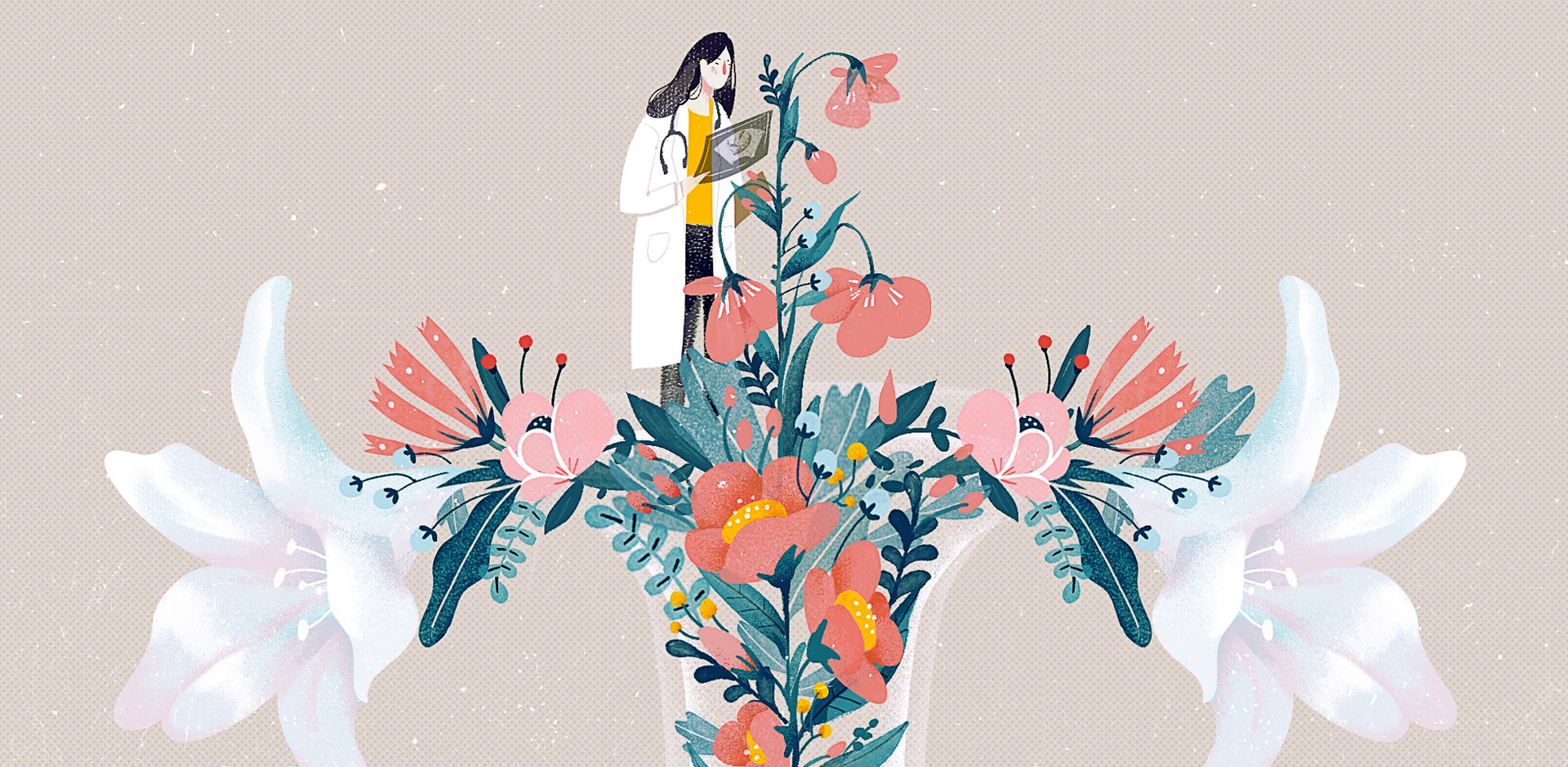
Image Credit: The Atlantic
An active “public space” for discussion is a critical factor for social, political, and cultural change in a country, which many social media platforms provide the opportunity for. Sri Lanka is no stranger to using social media at an increased rate. In January 2021, there were 7.90 million social media users in Sri Lanka, equivalent to 36.8% of the total population. Among these platforms, abortion, a word that raises many an eyebrow in our “conservative” sunny island, remains a topic debated across these digital platforms, be it threads on Twitter, posts on Facebook, or even videos shared on Instagram TikTok, or YouTube. It is not news to any reader that Sri Lanka has some of the strictest abortion laws in the region with rigid exceptions, i.e., illegal unless where the mother’s life is at risk as per Section 303 of the Penal Code.
It is essential to understand the viewpoint of the public in this regard and analyze the information that is being disseminated across the internet, which, if inaccurate, will continue to strengthen the debate against abortion rather than promote any hope of legalizing it fully or within limitations. So what exactly do we mean by abortion?
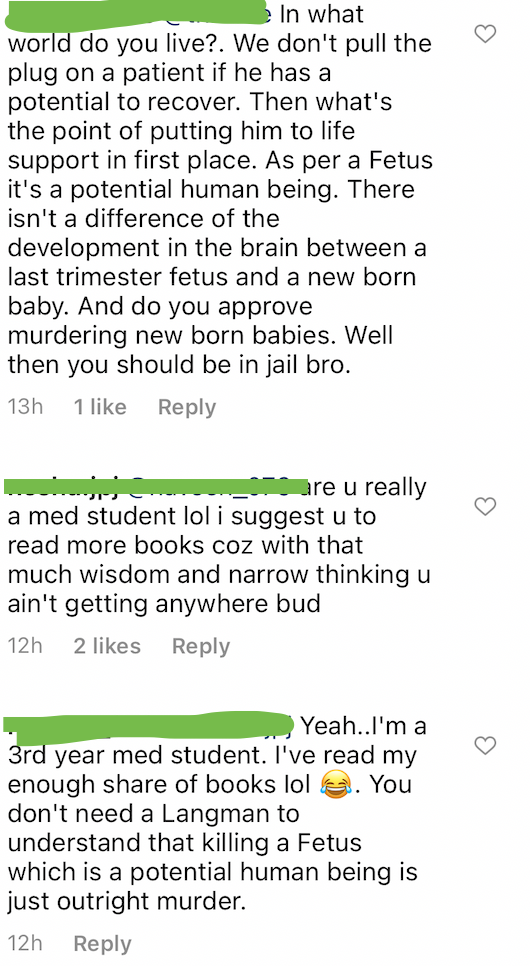
Abortion is a process where there is premature expulsion of a fetus from the uterus, simply put, it removes the fetus from the body of the mother through a medical procedure, terminating the pregnancy. This definition itself is challenged and mutilated in various ways, where conservative views speak of the pain of being slowly killed being felt by the fetus and orchestrating emotionally driven and factually unsound statements and situations on social media to manipulate the fetus public view on what abortion exactly is. Regardless of these moral and often religiously driven views, the fact remains that illegal abortions happen every day in Sri Lanka in secret out of facilities that mostly do not have the proper sanitary and hygiene standards for the procedure, resulting in lifelong health conditions that will affect the female undergoing the procedure or even death.
The Online Discourse And Policy Change: Does Public Opinion Matter?
There have been many efforts by the country’s medico-legal community to reform the law relating to abortion, the latest being efforts by Justice Aluwihare’s Special Commission seeking to legalize abortion under three grounds:
- Rape
- Incest
- Serious fetal impairment
The policy discussion related to bringing about these grounds was said to be favorable. However, the consulting of religious leaders for views and also regressive perspectives of parliament members in identifying these reforms as a “free pass for women to be promiscuous” showdown these recommendations bringing the efforts to a standstill. This was not the first case of such disappointment to policymakers, legal drafters, and Women’s rights-related groups, as there have been longstanding efforts from 1995, 2011, and 2013 respectively.
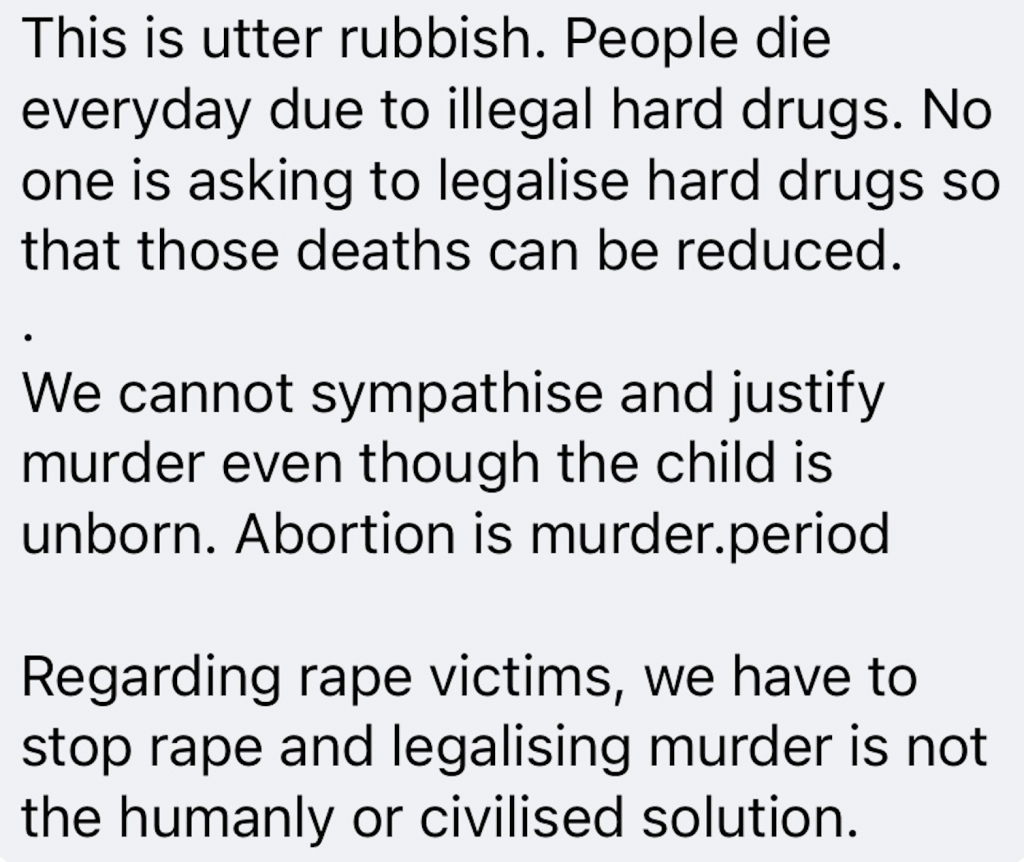
However, the online discourse regarding such reforms has been divided into several key camps. The conservative religious, the neutral, and the liberal free-thinking. It is interesting to note that when these policies are discovered to be in place, the conversation regarding them is almost always misinformed. The conservative camp relies primarily on shock value statements that carry religion and Sri Lankan culture as its main tools, so much so that when the recommendations were made, the online conversation would carry opinions stating that the government is trying to legalize free abortion, where any woman could abort as she pleases whenever and wherever she wants. This is further perpetuated by religious leaders and public representatives who publicly oppose Abortion. For example, during the parliamentary debate when the proposed reforms were tabled, many MPs voiced their dissent based on religious and cultural ideals. A Muslim MP invoked the Quran, stating that ‘Life begins at conception. That is God’s work. We have no business to interfere with insinuating that allowing abortion would also help strengthen the male-female imbalance in our society as many young males die from violence. One MP representing the Catholic community stated that all sections of Sri Lankan society would oppose these reforms as we have a belief in the sacredness of life’ and affirmed that ‘not only Christians but also Buddhists, Muslims, Hindus and all who believed in the supremacy of life’ will stand against such reforms.
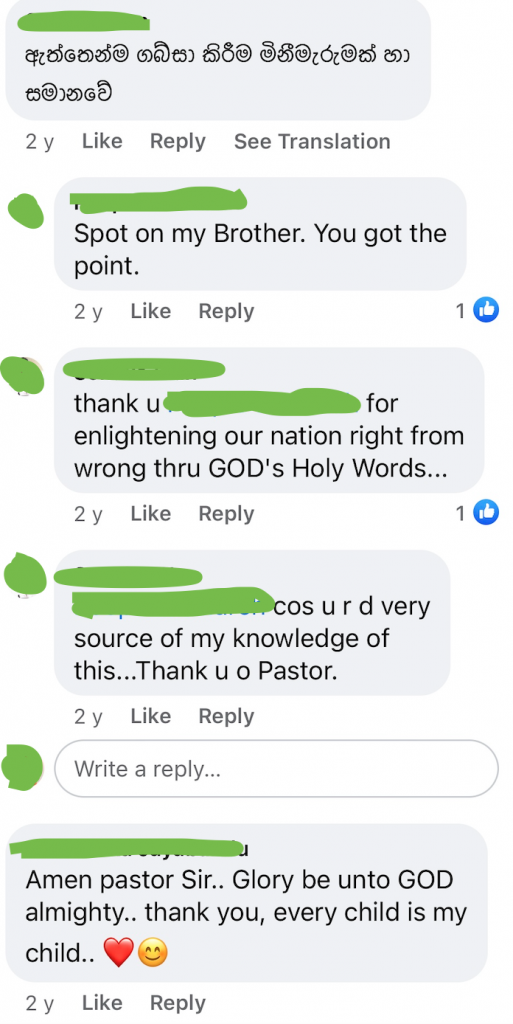
Further, in August 2017, the Catholic Bishop’s Conference unanimously condemned the Government’s efforts to reform abortion laws, holding the opinion to quote that “we say no to abortion under any circumstances. We believe that the precious life of a human being starts at the very moment of conception and is sacred.” Following this, in September 2017, a Congress of Religions hosting Buddhist, Islamic, and Catholic religious leaders came together to jointly oppose the reforms, strongly upholding the view that abortion is murder according to all their religions, with the Buddhist clergyman going so far as to state that evenaAbortion on the grounds of lethal fetal abnormalities are unacceptable as “No mercy killings are permitted.”
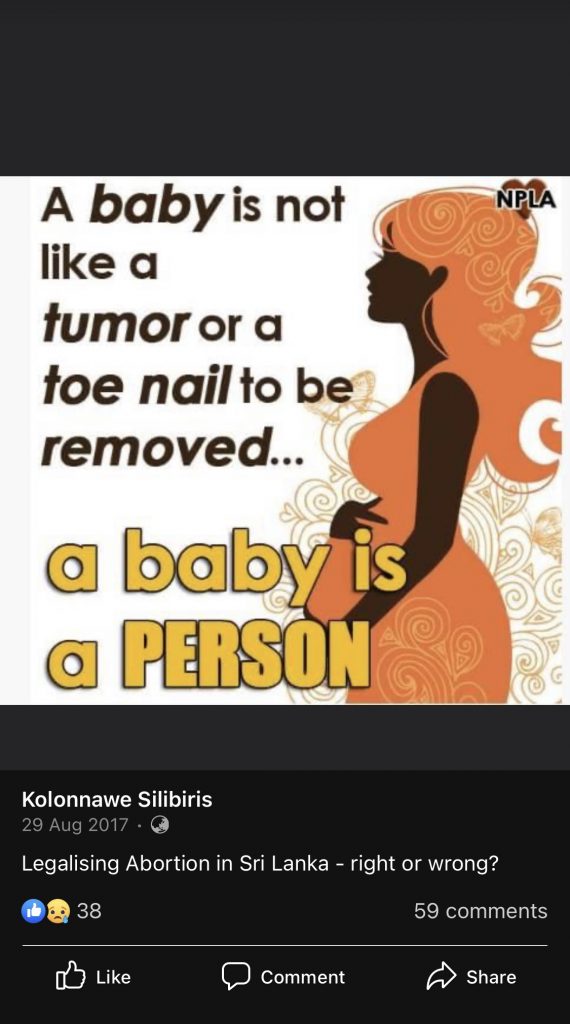
These views expressed that make national headlines and give fodder to publish pro-life narratives have proved increasingly harmful to understanding the need for Safe abortion in the country. Generally, we note that the engagement on such posts would be more than a post carrying accurate information about abortion, as the shock value, the number of shares, forwarding, and interactions with the posts with conservative values are more. This, entangled with statements alluding that abortion is a Western concept trying to destroy our Lankan culture and that killing another is a sin according to respective religions, further feeds into misconceptions related to what abortion is as well as the Governments efforts into making any change regarding its rigid and backward laws.
The neutral camp here is those who do engage with posts from either camp and do not have a strong opinion or side with one camp. The legalization of abortion is immaterial or is not an issue that applies to them either because they are women who would not go for an abortion, the older generation of men who do not see abortion as an issue “worth talking about.” This camp fails to understand that abortion is not only a question of autonomy over your own body but a pressing health risk. In addition to illegal abortion clinics, lack of access to them owing to poverty or lack of awareness, and due to the existing legal atmosphere surrounding abortion, women are carrying out at-home abortions using coat hangers, bicycle parts, and papaya leaves which can result in hemorrhages, sepsis, peritonitis, trauma to the cervix, vagina, uterus and abdominal organs and secondary infertility. To illustrate the extent of urgency in this matter to view it as a public health issue: In Sri Lanka, 12.5% of all maternal deaths are due to illegal abortions. However, it is scarce that the topic of abortion is viewed through the lens of a public health issue online instead of a cultural, religious, or ideological impasse between persons.
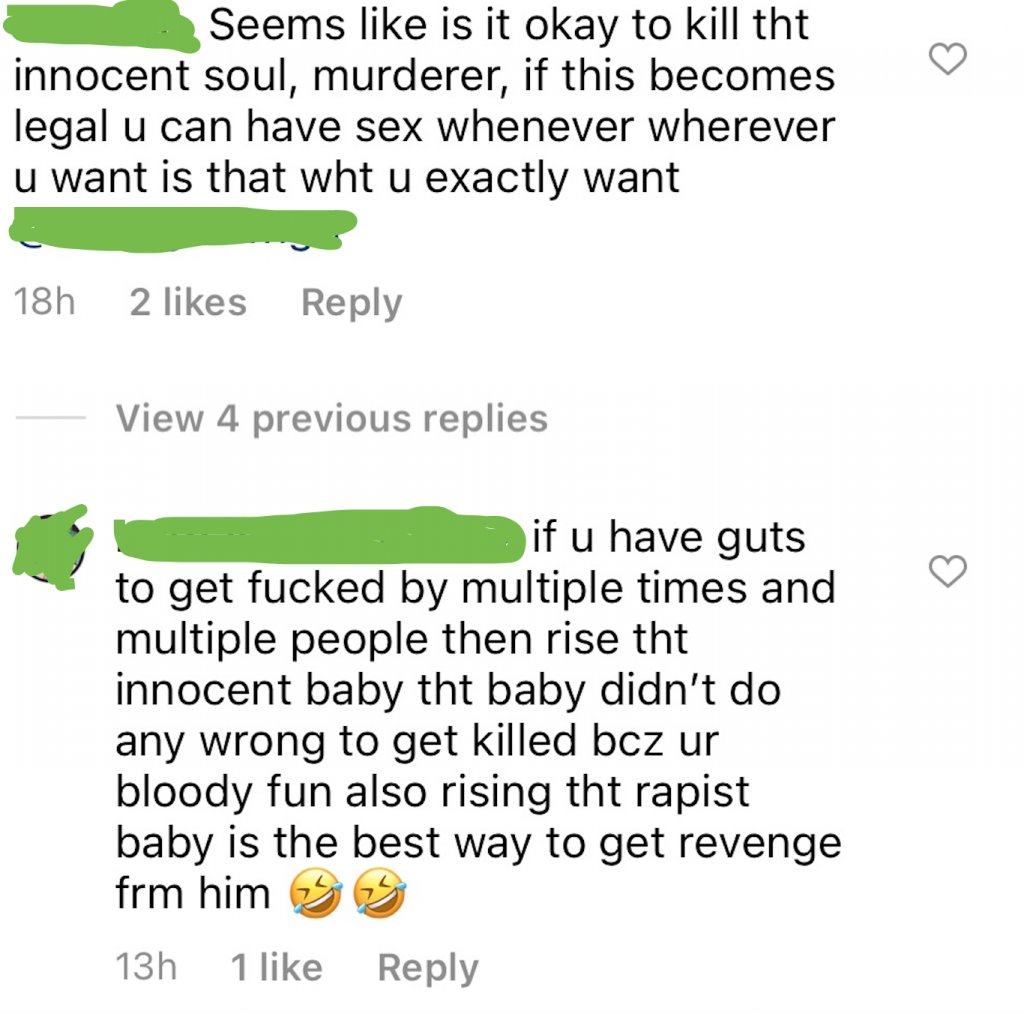
The liberal camp is generally believed that abortion should remain a free right available to each woman without restriction. However, owing to the contemporary debates where Sri Lanka’s abortion reform cannot even achieve the green light on the valid grounds mentioned, an unrestricted right to abortion can almost remain a distant dream. The realization of this generally gives birth to opinions and posts in support of abortion under the limitations mentioned by the 2017 Commission. However, the clashes between the conservative and liberal camps still further damage the cause. The ability to have an informed conversation without the usual name-calling and insults is rarely seen on online platforms. As much as the conservatives do not wish to change their views even presented with facts, the liberal camp must cultivate patience and continue to educate regardless of the obvious frustration and annoyance they face if they strictly want to achieve the end goal in mind.
Out of these camps, we cannot ignore which camp gets more political attention since their views play into the existing bias of those in power. The conservative perspectives carry the majority’s voice, which is heard by the legislature, who use their dissent as a weapon to shut down the reform processes from materializing further constantly. The online discourse that disapproves of abortion continues to make more noise than the liberal and drowns out intellectual and factual debate, expanding the gap between policy and people. It also gives room for conservative politicians to use public dissent as an excuse not to enforce much-needed reforms to protect the rights of women within our highly patriarchal system. Governments have time and time again exhibited this excuse in fear of losing majority votes and religious leader support.
Are Women Even Talking Or Listening Online?
Compared to the conversation two decades ago, the dialogue around abortion has improved, taking positive turns from time to time regardless of the existing disagreements. Many women’s rights and Reproductive rights-based organizations have taken their information to the digital sphere through tweets, blogs, videos, and informative articles or blurbs posted for a quick rundown on abortion and services. These publications and conversations that arise out of it have led to some perspective change, for example, the Ceylon Medical Journal published in 2016 that on a study conducted to gauge public opinion on Abortion, a majority agreed to the legalization of abortion for rape (65%), incest (55%) and pregnancies with lethal fetal abnormalities (53%). The study consisted of 41.2% male and 58.8% female responses from diverse socio-economic backgrounds.
However, the question remains whether women are actively involved in these debates online, or do they have equal access to engage in conversation or information. An alarming number of conservative posts and engagement on social media come from men, who direct the conversation around abortion in an inaccurate manner. Some women also join these posts in support or post conservative content denouncing abortion. Within these posts, the topic of abortion is trapped within religious, moral, or culturally sensitive discourse driven by emotion or ideology rather than logic or fact, which creates more barriers for the conversation to take place at all. Due to the “clout,” these topics bring in, public accounts with a large following, for example, meme pages or university groups, promote such damaging content to gain reach and spread ill found perspectives about Abortion as a purely evil deed sought out by liberal feminists or “wild women.” Even at a policy level, women are rarely present at the table when legal reform is discussed. To illustrate: where a group of medical doctors representing the Health Ministry met with religious leaders to consult on reforms to abortion, not even one woman, doctor or otherwise, was present. This same situation seems to be reflected online, paired with the fact that a woman speaking in support of abortion is often ridiculed and insulted as the wild, promiscuous woman who wants abortion to be legalized to fulfill her selfish needs or mistakes made out of wedlock. This notion fails to identify that more than 90% of patients who seek abortions are married women.
There are several women activists and female doctors who do speak on abortion from a balanced perspective online. However, they are limited to platforms that not everyone might be interested in engaging on, i.e., Twitter or blogs, or personal posts on their profile that cannot be shared or only seen by a limited audience, noting that much of this content is expressed in English. This situation only educates a certain privileged section of society with access to the platform, interest, and language proficiency. Even though knowledge dissemination can still go forward through word of mouth if at least one person sees such informative content, this does not guarantee that access to such data and discourse is an asset available equally to any woman from any corner of the country. This also makes it easier for the shock value posts to make more rounds on social media than fact-based information, which will continue to keep women in the dark about the need for abortion as well.
What Next?
To remedy the issues discussed related to the online discourse on abortion, there needs to be widespread knowledge dissemination from experts on the subject and those who read and understand the content that speaks informatively on abortion. Studies that provide information also need to take a more inclusive approach rather than being isolated to Colombo. To gauge the national perspectives on abortion and educate more people, Colombo will not serve as a successful benchmark.
The departure from debating about abortion as simply a free unrestricted right or a religious and moral unacceptability to viewing it as a rising public health risk remains a necessity. Content in Sinhala and Tamil that will have the capacity to overthrow damaging conservative posts also remains a must, as this should not be a topic primarily spoken between English-speaking intellectuals. This may also succeed in promoting accessibility to more women around the country and a chance to bring them into the conversation as well.
Note: All screenshots included in the article were sourced by the writer. Names and other identifying details have been blacked out for privacy reasons and are the only changes made to the image following the screenshots taken.
About the Writer
Kaveesha Coswatte is the Legal and Programs Analyst for iProbono in Sri Lanka and a lecturer at the APIIT Law School. Her work mostly involves legal drafting and reform, providing pro bono legal services to vulnerable minorities: mainly women, children, and the LGBTIQ community, and awareness building. In the field of higher education, Kaveesha has co-authored the BSc Law and Psychology program for the Open University of Sri Lanka, unifying the criminal justice system and psychological aspects that contribute to crime and victimology. She is also a published author in multiple legal researches based on accessibility to justice, human trafficking and legal status of LGBTIQ persons in Sri Lanka; and poetry focused on contemporary social taboos and gender. As hobbies, Kaveesha is passionate about travelling, singing, slam poetry and volunteering for international disaster relief and refugee education