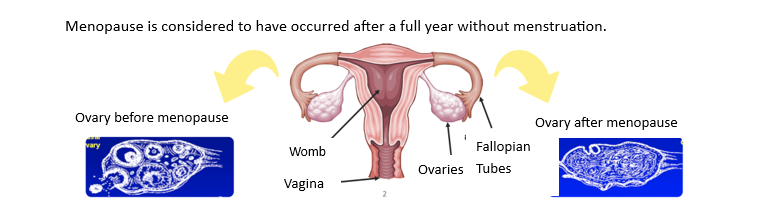
The end of a woman’s regular menstrual cycle, i.e., when menstruation stops is referred to as menopause.
While information around a girl’s first menstruation, and how the menstrual cycle works, is commonplace in Sri Lanka, there is less information on how menopause works, and what this means for women. The key reason being that the shame that tends to be associated with menstruation in Sri Lanka prevents an open and frank discussion around women’s bodies extends to the sexual and reproductive health of older woman.
Most women reach menopause around the age of 50, while others may reach menopause a few years earlier. Hormonal changes often occur a year or two before menopause and this period is called perimenopause.
Symptoms
To help women as they journey to and through menopause, this list of symptoms cover a broad range of physical and psychological changes that women might experience during perimenopause, menopause, and post-menopause. It’s important to note that these symptoms can vary widely among women, both in terms of which symptoms they experience and the severity of those symptoms.
- ACNE – Hormonal changes during perimenopause can lead to a variety of skin challenges, including adult acne. About
25% of women in their 40s experience adult acne. - ALLERGIES – New allergies or worsening of existing ones. It’s hard to quantify this specifically related to menopause.
- ANXIETY – Excessive worry or fear. Roughly 25% of women experience increased anxiety.
- BLOATING – Swelling in the abdominal area, often caused by gas or fluid.
- BODY ODOR – Alterations in personal scent.
- BREAST PAIN – Tenderness, soreness, or discomfort in the breasts.
- BRAIN FOG OR MEMORY LAPSES – Forgetfulness or temporary amnesia. Around 60% of women may experience memory lapses.
- BRITTLE NAILS – Nails become weak and break or peel easily. This is often due to aging rather than menopause itself.
- BURNING MOUTH – Sensation of burning in the mouth or tongue. Roughly 10-40% of women may experience this.
- DEPRESSION – Persistent sadness, anxiety, or emptiness. Approximately 20-30% of women experience depression during
menopause. - DIFFICULTY CONCENTRATING – Issues with focus and memory. Around 60% of women may experience this.
- DIGESTIVE PROBLEMS – Changes in gastrointestinal function, including gas, indigestion, and nausea. It’s hard to quantify this specifically related to menopause.
- DIZZINESS – Feeling unsteady or loss of balance.
- DRY SKIN – In menopause, skin loses some ability to hold water, so skin can get quite dry. This can be especially noticeable when the air is dry. Issues with skin is common in most women at menopause.
- ELECTRIC SHOCKS – A brief and usually mild sensation resembling an electric shock under the skin or in the muscles.
- FATIGUE – Extreme tiredness or lack of energy. Around 80% of women experience fatigue.
- HAIR LOSS OR THINNING – This can occur on the head or body.
- HEADACHES – Frequent or severe headaches. Around 45-55% of women may experience an increase in headaches.
- HOT FLASHES – Sudden feelings of heat, which can cause sweating and redness. Approximately 75% of women experience hot flashes during menopause.
- INCONTINENCE AND BLADDER ISSUES – Difficulty controlling urination. Around 40% of women experience incontinence. There is also an increase in Urinary Tract Infections (UTI) during the menopausal transition.
- IRREGULAR HEARTBEAT – Heart rhythm disturbances, palpitations, or increased heart rate. About 25-50% of women may experience this.
- IRREGULAR PERIODS – Changes in frequency, duration, and flow. Most women will experience this symptom.
- IRRITABILITY – Easily frustrated or angered. It’s unclear how many women experience irritability specifically due to
menopause. - ITCHY SKIN – Pruritus or itching skin. About 25-50% of women may experience this.
- JOINT PAIN – Aches, inflammation, and soreness in any joint. Around 50-60% of women may experience joint pain.
- LOSS OF LIBIDO – A decreased desire for sexual activity. Around 20-40% of women experience this.
- MOOD SWINGS – Sudden and extreme changes in mood. Roughly 10-20% of women experience mood swings.
- MUSCLE TENSION – Tightness or discomfort in the muscles. It’s unclear how many women experience this due to menopause.
- NIGHT SWEATS – Similar to hot flashes, but occurring at night, often disrupting sleep. About 75-85% of women experience
night sweats. - OSTEOPOROSIS – A condition that weakens bones, making them fragile and more likely to break. This generally occurs
in postmenopausal women, and about 30% of all postmenopausal women in the United States have osteoporosis. - PANIC DISORDER – Sudden attacks of fear or panic. Roughly 10% of women may experience this.
- SLEEP DISORDERS – Difficulty falling asleep, staying asleep, or waking up too early. Approximately 40-60% of women experience sleep disorders.
- TINGLING EXTREMITIES – “Pins and needles” sensation or numbness in hands, feet, arms, and legs. It’s unclear how many women experience this specifically due to menopause.
- VAGINAL DRYNESS – A lack of natural lubrication in the vagina, which can cause discomfort. Approximately 40-60% of women suffer from vaginal dryness.
- VISION CHANGES AND DRY EYES – After menopause, some women report chronically dry and scratchy eyes, often along with light sensitivity, blurred vision, increased tearing, or swollen or reddened eyelids. Approximately 60% of perimenopausal and menopausal women are affected by dry eye syndrome.
- WEIGHT GAIN – Particularly around the abdomen. Most women will experience some degree of weight gain.
SOURCE: National Menopause Foundation CheckList
It is vital that we are willing to reach out to healthcare providers, where required, to get the support we need. While private healthcare providers would offer an array of services, we also encourage you to reach out to the existing network of government midwives and medical officers [MOH] who are extremely well trained in providing menopause-related services to those who need it across Sri Lanka, which includes areas of mental health support.