
How the manosphere is shaping boys’ attitudes towards women and their bodies
By Venessa Anthony

From promises of wealth and success to the policing of women’s behaviour, online personalities are shaping how young men understand masculinity. For some teenage boys, the appeal begins with the promise of a better life. But when that promise is tied to male dominance and control over women, the consequences can reach far beyond the screen.
At 14, Yevan Peiris (not his real name) wanted to be like Andrew Tate.
He was not particularly interested in debates about feminism or women’s rights. What caught his attention was something much more appealing to a teenage boy: the expensive cars, the apparent wealth, the confidence and the image of a man who seemed to have everything figured out.
His classmates were watching Tate, too. Following him was almost a way of fitting in. And perhaps, Yevan thought, if he listened carefully enough, he might one day have the kind of life Tate appeared to be living.
Eventually, however, the illusion began to fall apart. After discovering that much of the influencer’s apparent wealth was fabricated or exaggerated, Yevan and several of his classmates felt deceived. He stopped following Tate.
But the interest had not disappeared among his peers. Many boys in his grade continued to admire the influencer and believe what he said.
Yevan’s experience reveals something about the appeal of the manosphere, a loosely connected online ecosystem of creators, commentators and communities discussing masculinity, relationships, money and men’s place in society. For some boys, the attraction does not necessarily begin with misogyny. It begins with the lifestyle being sold.
The wealthy man. The physically strong man. The man who commands respect, attracts women and never appears vulnerable. The man who seems to have all the answers.
But what happens when that image of success comes with the message that men should hold power over women?
An old prejudice with a new sales pitch
For Co-Lead of Programmes at Delete Nothing Misha’ari Weerabangsa, understanding the manosphere in Sri Lanka requires looking beyond the personalities who have made it popular.

She argued that the country has long reinforced rigid expectations of masculinity and femininity through families, education, popular culture and institutional structures.
Boys are taught what it means to be boys, just as girls are taught what it means to be girls. Men are expected to provide, women are expected to care for the home, and masculinity is frequently associated with financial responsibility, authority and emotional restraint.
“What this content is doing really is reinforcing that structural thing that young men and boys pick up from the society around them,” she said.
The distinction, she explained, is that social media makes these narratives accessible in ways previous generations did not experience. Young people can encounter them without actively searching for them, while the content is often presented as advice, entertainment or motivation.
Weerabangsa also questioned the financial incentives behind the popularity of these personalities.
“The influencers, the podcasters, they’re all grifting. They’re all looking at this from a money-making lens,” she said.
Creators can monetise audiences through products, websites and other commercial ventures, while platforms benefit from the engagement generated by controversial content. Outrage can become part of the business model. The more provocative the statement, the more likely it is to be shared, criticised, defended and argued over.
And the messaging is not always presented as an outright attack on women. It can begin with something considerably more familiar: a young man being told to go to the gym, make money, become disciplined and take control of his future.
The problem emerges when that advice is tied to the idea that a man’s success is measured by his ability to dominate or control women, or that women’s independence represents a threat to male identity.
These ideas have consequences beyond how men and women interact socially. They also raise questions about how women are viewed as sexual partners, whether their boundaries are respected and whether their bodies are treated as their own.
When the algorithm enters the classroom
The influence of this culture is not always visible through boys openly declaring their admiration for Andrew Tate or another prominent manosphere personality.
Sometimes, it appears in the language they use, the jokes they make and the way they respond when girls challenge them.
Naz Sittampalam, a 16-year-old student at an international school in Colombo, said she was not aware of boys at her school following any particular manosphere creator. However, she had noticed that many were exposed to sexist and misogynistic videos appearing on their TikTok feeds.

She also identified American conservative commentator Charlie Kirk as a personality whose content some boys appeared to consume and readily support.
Naz described how girls who openly identified as feminists were sometimes labelled ‘weirdos’ or called crazy. When girls attempted to discuss feminism or challenge sexist behaviour, some boys would interrupt their conversations and turn them into arguments.
She also recalled remarks such as ‘go make a sandwich’ and comments suggesting that a girl was on her period when she challenged a sexist joke.
Perhaps more troubling was her observation about boys who did not necessarily express these attitudes themselves but continued to associate with those who did, rarely challenging their behaviour.
Her account illustrates how misogyny can move beyond a phone screen and become part of the social environment in which teenage girls grow up.
A boy does not have to subscribe to an Andrew Tate channel to repeat an attitude he has encountered through a short video shared by a friend. Nor does every boy who encounters this material necessarily accept it. But repeated exposure can make language and attitudes that would once have been challenged seem increasingly ordinary.
Naz’s experience should not be taken as representative of every student or every school. It does, however, raise questions about how young people learn to recognise and respond to sexism, particularly when it is presented as humour or an acceptable way of expressing an opinion.
When girls are repeatedly told that their opinions are irrational, their appearance is open to public judgement or their independence is something to be corrected, the message extends beyond a disagreement about gender roles. It can influence whether they feel entitled to speak, set boundaries and make decisions about their own lives.
Misogyny does not stop at borders
For Sri Lankan content creator Yashora Samaradivakara, who is based in Singapore, geographical distance has not necessarily meant distance from the misogyny directed at women who express themselves online.

Although she lives outside Sri Lanka, she continues to encounter hostility connected to attitudes towards women’s appearance, behaviour and independence. Her experience demonstrates how online spaces allow these attitudes to travel beyond national borders, reaching women regardless of where they live.
Reflecting on the hostility directed at her content, which largely centres on makeup and fashion, she questioned why men who did not even live in the same country appeared so invested in criticising what she chose to post.
She suggested that some of this hostility could stem from insecurity, with moral policing becoming a socially acceptable way of expressing resentment towards women.
“I think men can be jealous too, but it is often disguised as moral policing,” she said.
She also questioned whether restrictive ideas of masculinity leave men with little room to develop a sense of identity outside conventional expectations. If men were encouraged to invest more energy in understanding themselves and developing their own identities, rather than policing women’s choices, she suggested, they might become more secure and confident.
Through social media, attitudes about how women should dress, behave and present themselves can follow them across borders, making even their personal online spaces subject to scrutiny.
But the policing of women’s bodies is not limited to comments about clothing or appearance. It can become far more invasive when images and personal information are shared without consent.
When women’s bodies become public property
Recent revelations about Facebook groups circulating women’s photographs and personal information in Sri Lanka have exposed a particularly disturbing dimension of online misogyny.
Reports have described groups in which members requested and shared intimate images of women, including acquaintances, colleagues, partners and even female members of their own families. The Ministry of Women and Child Affairs has also acknowledged receiving reports about groups in which photographs and videos of people close to members were being shared.
These incidents are not necessarily evidence of a direct connection to the manosphere. They do, however, expose a wider culture in which some men treat women’s bodies and private images as material to be accessed, exchanged, discussed or consumed without their permission.
The fact that some of the reported requests involved mothers, sisters and other relatives makes the violation particularly difficult to dismiss as simply sexual expression. Familiarity with a woman does not grant anyone ownership over her image, body or privacy.
The issue is one of bodily autonomy: a woman’s right to decide what happens to her body, who sees it and how images of her are used. That right does not disappear because a photograph was once shared privately, because a woman is in a relationship with someone, or because a person knows her.
The circulation of such material also has consequences beyond the initial violation. Women may experience humiliation, fear, reputational damage, harassment and pressure to withdraw from online spaces. The threat that private images could be circulated can itself become a means of intimidation and control.
It is worth asking how these violations become possible in environments where women are routinely discussed as objects of male desire, judged according to their appearance or treated as though their boundaries are negotiable.
When misogyny is presented as advice
For Board Member of the Women’s Solidarity Network (WSN) Ursala Bastianz, the concern is not that men are speaking about their struggles. It is how easily misogyny can become part of conversations about becoming a better man.
Reflecting on a recent online controversy involving a Sri Lankan content creator, Bastianz raised concerns about the language used to describe women in online content attracting substantial audiences. She recalled seeing mainstream creators casually refer to women as ‘sluts’, questioning how such language could be normalised while the personalities using it continued to command large followings.
“I genuinely don’t think ten years ago I’d have expected to hear mainstream creators casually call women ‘sluts’ and still have huge audiences,” she said.
Bastianz argued that people should not need to wait for a court verdict before questioning the way influential personalities speak about women. Referring to Andrew Tate, she noted that he had faced social media bans and serious criminal charges, which he denies.

“What worries me about the manosphere isn’t men talking about their struggles. They absolutely should. It’s how easily misogyny gets dressed up as advice for becoming a ‘better man’,” she said.
She questioned why the self-improvement advice promoted by such personalities was being treated as something revolutionary.
“If you take the misogyny out of his message, what’s really new? Go to the gym, work hard, have a routine, make money, build something for yourself. Boys have heard that from parents and teachers forever,” she said.
“It’s the packaging that matters: perfectly ordinary advice mixed with the idea that being a successful man means having power over women.”
She cautioned that although not every young man consuming this content would adopt its views, the increasing presence of such messaging in everyday online conversations should not be dismissed.
The implications reach into the way young people understand relationships, intimacy and consent. If masculinity is repeatedly presented as control and femininity as submission, it becomes important to ask what boys are learning about a woman’s right to refuse, to set boundaries and to expect pleasure and respect within a relationship.
For Bastianz, the issue is not simply what boys watch. It is what they are being taught to accept as normal, and what happens when those attitudes follow them into their friendships, relationships and classrooms.
The next question is what happens when these ideas are carried into adulthood, particularly into the most intimate parts of people’s lives.
When online misogyny enters real-life relationships
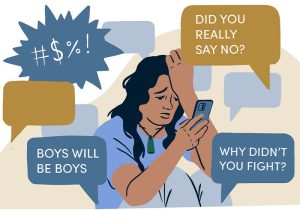
For some young men, the manosphere begins with an appealing promise: become stronger, earn more money, build confidence and take control of your life. But alongside advice about fitness, discipline and financial success, some online spaces promote a more troubling idea of masculinity: that women should be controlled, feminism is to blame for men’s problems and a man’s status is measured by the power he holds over others.
These ideas do not necessarily remain online. They can influence how young men understand rejection, approach relationships and view women’s independence. When a woman’s choices are framed as a threat to male authority, questions about her body, sexuality and reproductive decisions become part of a much larger conversation about power.
The concern is not that every young man who watches a manosphere video will become abusive. It is that content presenting women as inferior, manipulative or subordinate can reinforce attitudes that already make it harder for women to exercise control over their own lives.
From rejection to entitlement
Co-Lead of Programmes at Delete Nothing Misha’ari Weerabangsa, said the appeal of manosphere content could not be separated from the pressures young men faced in their everyday lives.
Boys were often raised with expectations that they should be strong, financially independent and capable of providing for others, while being discouraged from expressing vulnerability or admitting that they were struggling. Economic uncertainty and relationship difficulties could leave some searching for explanations and a sense of belonging.
Manosphere communities could offer that sense of belonging, but sometimes at the expense of women. Rather than examining the wider circumstances affecting young men, some influencers redirected their frustrations towards women and feminism.
For Amandha Amarasekera, a content creator and men’s mental health advocate, it was important to distinguish between experiencing emotional pain and turning that pain into resentment.

“A man experiencing rejection, heartbreak or loneliness isn’t inherently misogynistic. He’s experiencing something human. The problem begins when that pain is channelled into blaming others rather than understanding and addressing what’s happening within himself,” he said.
Through his work with Fragments of Men and men’s support circles, Amarasekera said he had encountered men who wanted to speak about their experiences without being ridiculed or made to feel weak.
The distinction matters. Men should be able to seek support for loneliness, rejection and insecurity. But women are not responsible for resolving those struggles, nor are men entitled to their attention or affection.
Board Member of the Women’s Solidarity Network Ursala Bastianz, said misogyny could become more difficult to recognise when it was presented as advice for men.
“It’s the packaging that matters: perfectly ordinary advice mixed with the idea that being a successful man means having power over women,” she said.
If a man is repeatedly taught that women should be accommodating or subordinate, it is worth asking what he comes to expect from a partner, and how he responds when she disagrees, refuses sex or makes decisions about her own body.
Consent, control and women’s bodily autonomy
One of the most serious consequences of treating women as subordinate is the possibility that their consent becomes secondary to a man’s expectations. Consent is not a one-time agreement. Entering a relationship does not mean giving someone permanent access to one’s body. Marriage does not remove the need for consent, nor does a woman’s previous decision to have sex mean she cannot refuse on another occasion.
Yet Sri Lanka’s legal framework raises difficult questions about the recognition of sexual violence within marriage.
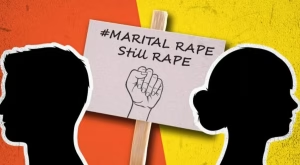
Under Section 363 of the Penal Code, the definition of rape includes an exception concerning intercourse with a man’s wife where the couple is not judicially separated. In effect, forced intercourse within an ongoing marriage is generally not recognised as rape under this provision.
Attorney-at-Law Pujanee Galappaththi explained that other legal provisions may nevertheless offer avenues for redress. “Under the Prevention of Domestic Violence Act, a woman can apply for a Protection Order through the Magistrate’s Court. Depending on the circumstances, provisions relating to grave sexual abuse, assault and physical harm may also apply,” she said.

A married woman can report sexual violence to the police, request a medical examination and seek legal protection. However, the charges available will depend on the circumstances and evidence. Galappaththi noted that the marital exception creates a significant barrier to prosecuting forced intercourse as rape. Stigma, victim-blaming and pressure to reconcile may also discourage women from reporting abuse.
Attempts to address this gap have been made. The 2024 Penal Code Amendment Bill proposed removing the marital rape exception but was withdrawn before becoming law. Galappaththi said reform remained important to ensure that marriage did not exempt perpetrators from accountability and that consent was recognised regardless of marital status.
Control over women’s bodies can also extend beyond sex. Decisions about condom use, contraception and pregnancy should be mutual, yet a partner who believes he should have the final say may pressure a woman to abandon birth control, refuse protection or have children against her wishes. Women’s sexual needs and pleasure, too, should not be treated as secondary to male satisfaction.
The manosphere cannot be identified as the cause of every instance of coercion or violence. However, narratives that present male authority as a natural right and female obedience as an expectation risk reinforcing attitudes that undermine women’s ability to make decisions about their own bodies.
Understanding the anger without excusing it
Licensed Clinical Psychologist Dr Suhaila Shafeek Irshard said young men could experience isolation and difficulty forming relationships while also feeling pressured to meet expectations of what a “real man” should be.

Online communities could initially provide belonging, validation and understanding. The difficulty was that some offered explanations for men’s problems by blaming women and feminism.
These spaces could become echo chambers, she explained. As people who disagreed left, the remaining group could reinforce increasingly rigid views. Irshard also described how emotional pain could be redirected into anger, which might feel easier to express than shame, rejection or insecurity.
Head of Therapeutic Services and Counselling at Swasthi, Anita Sharma, similarly noted that young men experiencing loneliness and rejection could struggle to express those feelings in environments where emotional toughness was expected.

“A young man who has experienced rejection may begin to believe that women are the reason for his pain especially when he is constantly exposed to such messages,” she said.
Understanding these pressures does not excuse misogyny. It does, however, show why simply telling young men to stop watching certain creators may not be enough. They need spaces in which they can discuss loneliness, mental health and relationships without being encouraged to blame women.
A different model of masculinity
Amarasekera argued that the response to harmful online communities should not be limited to telling men what they should avoid. It should also involve showing them what healthier relationships and forms of masculinity can look like.
“Ultimately, I think the conversation needs to move from teaching men what they shouldn’t be to helping them understand the kind of men they can become,” he said.
Through men’s support circles, he aims to create spaces where men can speak openly, listen to one another and acknowledge difficult emotions without being ridiculed.
For Bastianz, however, conversations about men’s wellbeing must not come at the expense of women’s rights. Men deserve support, she said, but women do not owe them attention, affection or emotional labour. Any meaningful discussion about healthier masculinity must also involve accountability and a willingness to challenge misogyny.
Weerabangsa argued that addressing the influence of the manosphere required more than focusing on individual influencers. Gender expectations were reinforced through families, schools, popular culture and institutions, meaning that efforts to change them also had to reach beyond social media.
Young people need opportunities to discuss relationships, consent, gender and emotional wellbeing honestly. They also need accurate information about sexual and reproductive health, and the freedom to make decisions about their bodies without pressure or intimidation.
The manosphere is not the only source of misogyny, nor will every young man who encounters its content be persuaded by it. Its influence exists within a society where many of the gender expectations it promotes are already familiar.
But when male authority is sold as self-improvement, women’s independence is presented as a problem and rejection is turned into resentment, the consequences can reach into the most personal parts of people’s lives.
A different model of masculinity must begin with a simple recognition: women are not rewards for male success, relationships do not create an entitlement to sex, and marriage does not cancel consent. A woman’s body, sexual health and reproductive choices remain her own.