
By Hans Billimoria
3rd June 2021
Once Upon A Time
The first virgin I encountered was Virgin Mary. Inevitable, I suppose, for all those who grew up in a Roman Catholic household. She stood in the form of a blue and white molded plastic bottle on a strategically placed altar shelf that burned with perpetual candle light in what now looks like a red shot glass. Our grandfather used to perform a nightly ritual of unscrewing her crown and sprinkling the sanctified tap water liberally about us as we lay snuggled in our beds, mimicked soon after by our mother who sprinkled the other holy water – citronella oil – to deliver us from the evil of malarial mosquitoes.
We learnt early that Jesus was born of a virgin. It was intrinsic knowledge about the experience we loved best – Christmas; that wondrous time of new book smells, Matchbox cars, rich whisky puddings and a license to consume as many pig products as possible – sausages, ham and bacon all in a single day! Virgin was an honorific akin to Saint. I did not comprehend that this meant no penis had defiled her.
I don’t quite recall exactly when I began to associate the hymen with virginity. As any child of the veranda knows, adult conversations allowed for incredible insights on subjects we had no business knowing so young. “No longer a virgin” or “Not a virgin anymore” must have crept in first. What also percolated through was the association of sin and sex. That is, sex outside of the sanctity of marriage. You can’t mime horror at the loss of virginity and hush-whisper prostitute and then expect us to be sex positive. Why is she no longer a virgin mummy? What does prostitute mean granny? These were not questions we asked out aloud because intuitively we knew that we’d be giving the game away – the children were listening, intently, even as they staged battles among the Begonia and Dollar Fern pots between the Khaki British and Grey German plastic soldiers made in China.
As a young teenager, the hymen confusingly transmogrified into pettiya – the Sinhala word for box. To have sex with a girl for the first time was to break her box. Girls who did not have sex were called virgins. The Christmas narrative suddenly became very adult. Mary gave birth to Jesus without having sex. She still had her box. This was the miracle, not Saint Nicholas’ ability to circumvent the globe on Christmas eve delivering toys to every single child on his nice list.
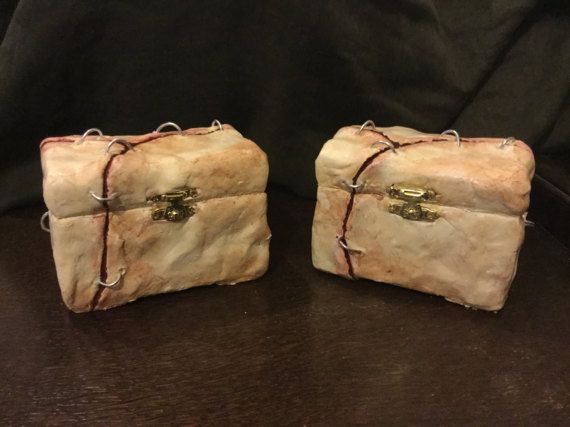
Human Skin trinket box, Macabre trinket box, creepy…
The box befuddled what was already a limited understanding on the vagina. The extremely rare print images we had access to as young teenagers depicted a space between her legs covered with pubic hair and absent of any protrusion. They had no peeing apparatus like us. Girls have to sit and pee; we were told during our most rudimentary hurried parental [read mother] allusions to the differences in human male and female anatomy. [That and breast of course. They couldn’t hide breasts. Cow udders were a reference point.] Given the early association of vaginas and peeing, for years, until I got up close to one, I imagined that girls urinated out of their vaginal orifice.
Bereft of any accurate anatomical description the vagina became a box sealed tight with a hymen-lid made of human tissue [there may or may not have been hinges] that was quite difficult to break through. This was corroborated by references to bleeding and pain during first sexual intercourse – the 80s dictionary word for fucking.
Then we became privy to the revolutionary narrative that hymens break even without being penetrated by a penis. Physical activity was the culprit offering girls rational excuses. You didn’t have to be gymnast performing acute gyrations, the simple act of riding a bike, or climbing a tree, could affect the integrity of the hymen. It’s value as a symbol of purity and virtue was now in question.
Unprecedented Access
The juxtaposition of sexual liberation [fine for others] and sinful pre-marital sex [not for us] can be confusing when you’re growing up in Havelock Town. This childhood befuddlement is undoubtedly another causal factor for The Grassrooted Trust to advocate for involving parents in unpacking sex and relationships for their children, age-appropriately, to help separate scientific fact from moralizing fiction. Ironically, open lines of communication between parent and child are especially crucial given the unprecedented access to information online.For example, the conflation of porn with sex among young people, while not formally studied in Sri Lanka, appears widespread based on anecdotal accounts of the young people we work with. We carry porn in our pockets on devices that can access every kink and fantasy within moments. The 2016 bakamoono.lk online porn survey 800 Odd Criminals: watching Porn in Sri Lanka indicated that the 13-19 demographic mainly accessed porn on smart mobile phones.
High performance sex googling has also led to Sri Lanka regularly being placed in the Top 5 countries for googling sex, winning repeatedly between 2011 – 2016. Another clear indicator of where our young people access information on sex. The emergence of a home-made pornography industry, initially resulting from the consensual sharing of intimate photographs, is beginning to thrive in Sri Lanka.
“In a disturbing trend, WhatsApp groups, closed Facebook groups, Dropboxes and pornographic websites are devoting themselves to sharing images and videos of Sri Lankan women and girls. These predators have turned the illegal practice into a lucrative business.” – Porn and Nudes: Delving into Cyber Exploitation in Sri Lanka
Some of our young people unwittingly become content providers, while others seek to actively generate content, by any means, including violence, blackmail and extortion. If there was ever a time for sensible parental intervention with their children and young people… and it must be with both would-be victims/survivors and perpetrators. Our young people are exploiting each other. We have to return to the fundamentals of values education: respect for self, other, and difference; understand consent; cultivate empathy; learn the fine art of trust; and don’t humiliate, belittle, bully – help build another’s self-esteem, don’t rip it apart. And for this to work, our children must overcome repressive gendered conventions that apply to sex, reproduction and relationships.
Which is the more onerous task? Speaking with your young person about exploitive home-made pornography or the fact that virginity and hymens are both social constructs?
In the 1999 Luc Besson Film The Messenger: The Story of Joan of Arc, the soon to be pyre-fried Joan is publicly subjected to having her hymen examined, albeit surrounded by billowing white sheets and the requisite pomp and pageantry of a Royal Court, to find if she was indeed a worthy vessel of God. The finding: There is no sign of corruption or violation – she is intact.
This idea that you can feel around and establish the existence or non-existence of membrane and then to marry that with immaculate cunning to purity and corruption is arguably one of Patriarchy’s most shrewd constructs. It’s whispered about in some form at least from the time girls first menstruate and find themselves cloistered from the boys. Not only are they ready to have kids, they must be protected from having them. Fantastic tales of probing blood spattered discovery scared the girl into submission and emboldened the boy – I can’t be found out!
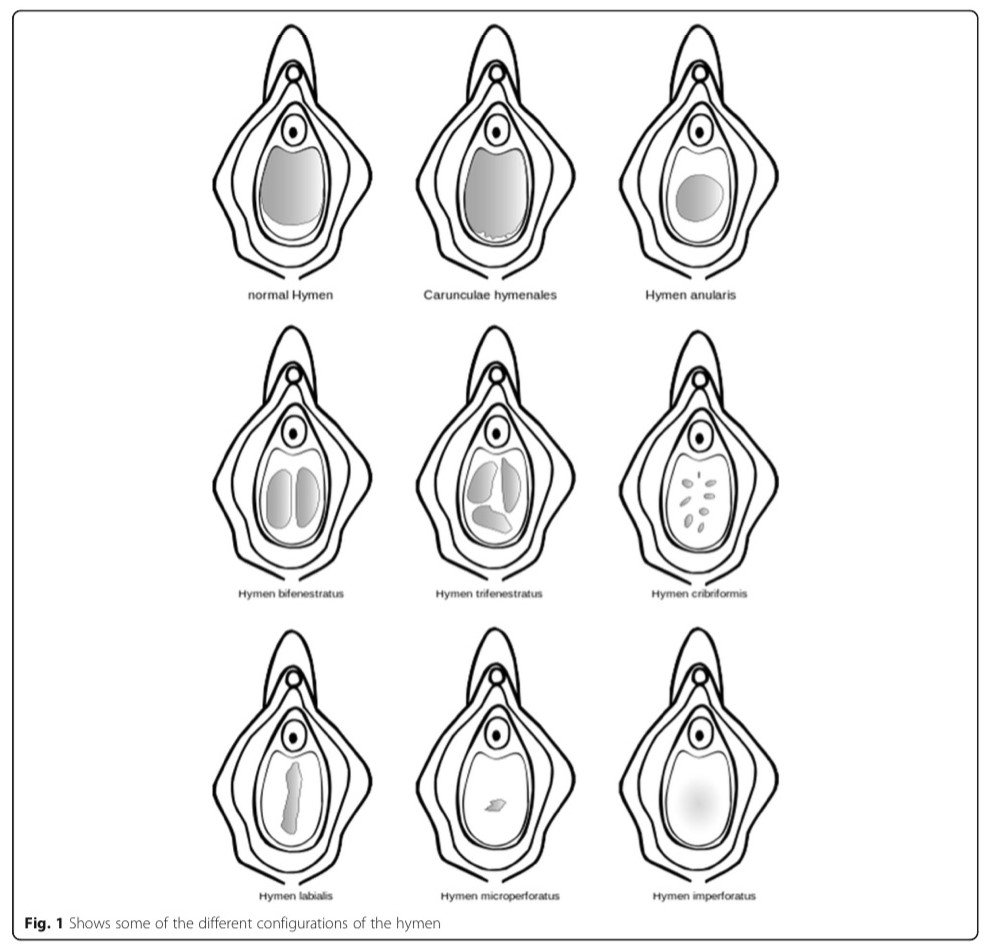
For me the hymen solidified into what I now call the full-wicket-cover hymen; a cricketing euphemism to describe the imperforate hymen, the hymen with no holes, the hymen that covers the entirety of the vaginal passage. Presumably resembling the hymen of Joan of Arc.
Imagine a tribe where a reproductive health lesson presents the facts about the hymen.
“So what we do know from science is the hymen is quite rigid at birth, and provides a more robust covering of the vaginal opening. And then it starts to change. And by the age of three, it’s very less rigid. And the shape and elasticity change with age. This is because the hymen has served its purpose, protecting the infant vagina from urine and feces. Because before puberty, the vagina is very sensitive to irritants. So a mechanical barrier that’s in place until continence kicks in, makes sense.” Dr Jennifer Gunter, Canadian Gynecologist
What if we had a lesson with simple diagrams that explained how hymen tissue presents differently every time, and that some women are also born without a hymens, making it impossible to prove virginity by means of intact hymen?
This lesson could include a case study covering the 2010 virginity-testing controversy that embroiled the then Vice Chancellor of the Sri Jayewardenepura University who ordered two of his female students to undergo a virginity test after being seen in the company of male students. The consulted medical practitioners at Colombo South Teaching Hospital reportedly conducted no such tests. This momentarily brought virginity under the glare of media scrutiny where myths were rejected, science was reaffirmed, and then collectively forgotten in the interest of preserving our quaint cultural scruples.
The United Nations in 2018 called ‘Virginity testing’, a human rights violation, with no scientific basis. The statement, which was issued during the World Congress of Gynecology and Obstetrics (FIGO) in Rio de Janeiro explained that the practice has “no scientific or clinical basis” and that “there is no examination that can prove a girl or woman has had sex”, as the “appearance of girl’s or woman’s hymen cannot prove whether they have had sexual intercourse or are sexually active or not”.
Would this challenge the existing narrative that made one young man in Anuradhapura exclaim:
“But how can we be sure of the girl then?”
Another said:
“This can’t be true. Everyone knows it’s okay for me to have sex because all I need is a shower before I get home. What is she going to do? [pointing to a female participant] Get stitched up?”
UNFPA Peer Educator Training Programme, Anuradhapura, 2010
Both these statements are indicative or our antithetical approach to virginity: Let the boys fuck. Make sure the girls don’t fuck. This gendered moral paradox is reinforced gleefully by entitled men and boys in Sri Lanka based loosely on religious prescription conveniently divested of similar chaste instructions for men. Also, men that claim monogomy isn’t natural to justify their philandering often struggle to extend that interpretation to cover their wives and girlfriends. I was also asked once by an intrepid young woman in Vavuniya about where the virgins for these boys come from if they’ve claimed to already have fucked every girl in the vicinity.
Re-Virginising Information Online
Under a minute online you will find information on how much a hymenoplasty costs in Sri Lanka. Currently in the range of USD1000. This clinic page also outlines why a hymenoplasty is so necessary, including as a thoughtful surprise gift. It also suggests that the hymenoplasty offers psychological comfort to those who’ve been sexually abused. if you can find USD 1000 or thereabouts. The description also cleverly includes valid medical reasons for a hymenotomy – the removal of hymen tissue. A necessity for Joan of Arc full-wicket-cover hymens that don’t allow for menstrual blood to pass and can lead to toxic shock syndrome and septicemia. A hymenotomy is also necessary, in certain instances, to aid penetration. Some couples struggle for years with pain that is never followed by the promised pleasure due to position and texture of some hymens. A hymenotomy is a practical potentially lifesaving medical procedure. The hymenoplasty is plastic surgery, a self-proclaimed “aesthetic solution”, there is no equivalence… but given how strong the patriarchal construct is, and the violent predilections of men, perhaps it’s a potentially lifesaving medical procedure too.
What are some of the reasons for the hymenoplasty?
Hymenoplasty is an aesthetic solution for women who want to repair or rebuild their hymen. Their reasons for seeking this procedure are different and can either be physical or psychological.
Reclaiming control: In the case of sexual abuse, women are naturally left behind by traumatic psychological problems. He may feel deprived of not only her innocence but also an opportunity to present a virgin gift of the intact hymen to the man of her choice. Hymenoplasty can not only provide the physical recovery the lady requires, but it can also provide psychological comfort and healing.
Forgetting the Past: Sexual curiosity and experimentation are naturally part of the growth process, especially during adolescence, when there are hormonal changes and occurrence of surges. Equality pressure can often force a girl to undergo sexual activity before being mentally prepared for the emotional effect of such physical relationship. As she grows older, she may complain about indulging in that curiosity too early or too often and may seek to bury evidence of what this might be in retrospect to be considered promiscuity or bad judgment. Revirginization can psychologically permit her to come back and start again.
Cultural beliefs: Due to the presence of an intact hymen is still important in many cultures, women may want to give this indicator of purity to their men for their upcoming wedding.
A gift: Many women who were sexually active may want to give their partner virgin experience, either as a surprise to a special occasion or the night of their marriage.
Rupture or tearing that occur accidentally: For most women, hymen penetration as a result of a bicycle or through riding, sliding on ice or the insertion of a tampon is simply unacceptable and decide for hymenoplasty to repair what is unintentionally damaged.
Improvement of sexual pleasure: After delivery vaginal muscles may become weak. Flaccidity also comes over time with age. Hymenoplasty also tightens these muscles, offering the added advantage of more sensuous stimulating sexual experience.
Imperforate Hymen: This is a condition where the whole vaginal opening covers the hymen. It is usually not detected until the girl enters puberty and blocks her menstrual flow. Hymenoplasty procedure for correcting this type of condition is referred to as hymenotomy, and a small hole in the membrane is created that allows the flow of blood.
Septate hymen: Hymenal tissue is divided into what looks like ropes in the form of bands. They look like tonsils that are connected to both ends and can prevent the use of tampons or penetration of the penis. This can also be corrected by hymenotomy. A septate hymen can also be related to a very thick or rigid hymen, such as the almost impermeable one of romantic lore mentioned above, which may require surgical penetration.
Microperforated Hymen: This resembles an imperforate hymen and can be corrected in the same way. The microperforated hymen has a small opening just enough to allow the menstrual flow. It is generally not a problem or requires enlargement unless a woman wants to use tampons.
In 2019 a product emerged on the Sri Lankan market to also help with the illusion of virginity. This product is available online in Sri Lanka, and is a just few taps and swipes away. The company reassuringly describes the process:
This artificial hymen is designed to simulate the loss of blood that occurs when a female first loses her virginity, the package comes complete with everything necessary to make you a virgin again, it includes 2 artificial hymen blood pills, a vagina tightening pill, a vagina temperature test, a sanitizing wipe, and special gloves to be used while inserting the pill. All of these items come in a kit to ensure 100% accuracy, so the pill will be activated by your body heat and safely dissolved in your vagina at just the right moment without any problems or side effects. This ensures that you and your partner will have the authentic experience.
We understand that the day you will use your artificial hymen pill is the most important day of your life, and you cannot risk using a product which is not 100% accurate. That’s why we have included all the necessary equipment to ensure the best result for your big day. You can rest assured that you will not have any infections or side effects the next day.
Both the hymenoplasty and the artificial hymen kit don’t just look to simulate a hymen or the resulting blood flow, but most crucially of all, being a virgin means you have a brand new bright blue tight vagina.
The sexually charged Indian advertisement for 18 Again, a vaginal tightening cream, reinforces the central virginal myth – heightened sexual pleasure. The undertone – stay tight girls if you want to keep your man – humorously extends to the grandmother and grandfather searching for the product online. The ad, placed squarely within the extended family middleclass home and so necessary middleclass morality, seemingly rejoices in the sexual rejuvenation of husband and wife… because the wife was once again like a virgin, allowing for her sacred innocence to be ruptured again, and again.
Hymen myth busting online in English is easy. Googling will get you the facts you need. Still, perhaps we need to do more to counter clinic pages that pseudo-rationalize-moralize-empathize to push costly non-essential medical procedures to women who fear being found out. Also, online myth busting hasn’t sufficiently percolated through to Sinhala and Tamil internet users.
Some young women in sex work were trafficked from their village under the guise of employment, then serially raped over a period to prepare them for customers. Unsurprisingly, who would want me now? runs a close second to I promised to send my family money. So, some women and girls have remained in sex work, or return to sex work after being “rescued”, because they’re too ashamed to return to their families. They have no gift to give. They now have a service to sell.
We need to deconstruct virginity. No one is arguing that the concept of virginity be abolished. We need to help young people reflect on their intended decisions. For example, limiting virginity to the hymen has led to increases in anal sex, oral sex, and any form of sexual intimacy that doesn’t involve penal vaginal penetration. Does this contribute to a sex positive outlook?
The fact remains we can’t depend on online information alone. We need the information in text books. We need parents and teachers to help discuss, design and develop straightforward age-appropriate information so that equality and equity make it out of the recommendation chapter of gender reports. The sooner we have sensible fact-based discussions in classrooms and between parents and young people, the sooner we counter damaging information that can no longer be successfully curated. There are no librarians to lock up copies of Lady Chatterley’s Lover. We have to give our young people the tools and values they need to negotiate the online space. The simple science of anatomy in this instance is vital. It may challenge the narrative of the immaculate conception of the Virgin Mary, but then, that was special. We’re talking here about humans not gods.
“But how can we be sure of the girl then?”
“How can the girl be sure of you?”
“She has to believe me. She has to trust me.”
“Now, it’s your turn.”
About the Writer
Hans Billimoria has worked in the field of sexual and reproductive health and rights, and prevention of gender-based violence since 1999 – first with the Deep Griha Society in Pune India [1999-2009] , a UN consultant with UNAIDS, ILO, UNFPA, UNDP, and UNICEF [2009~2013] and as a member of The Grassrooted Trust [estd 2010] and bakammono.lk [estd 2016] teams from inception.